

Israel’s disaster by design.
Over three years into the U.S.,-backed, Israeli genocide in Gaza, and one year out from the so-called “ceasefire,” the conditions of life for Palestinians in Gaza are dire.
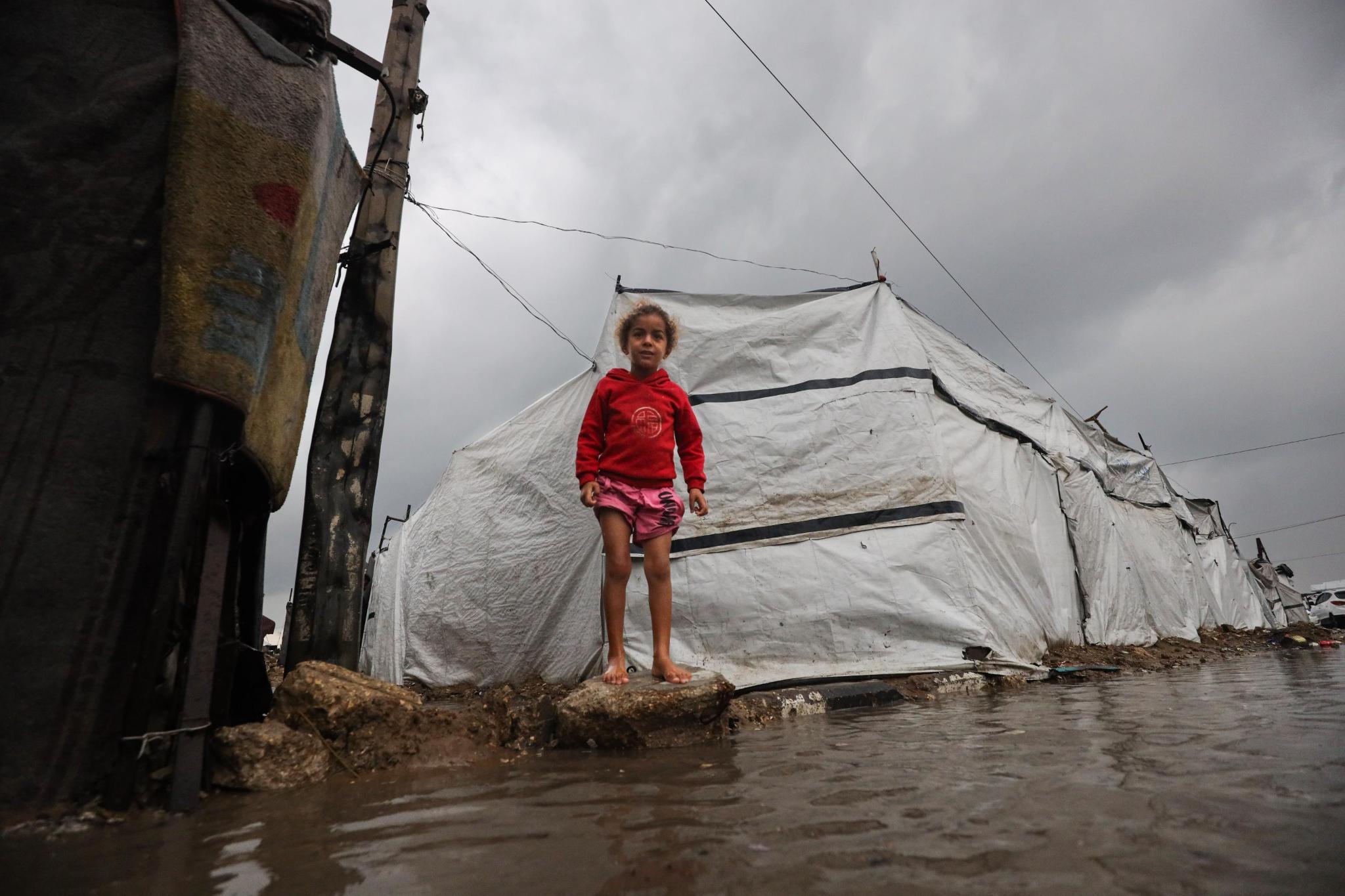
Nearly two million people are displaced and have been trapped in a fraction of Gaza’s territory — and this is the fourth winter that they are spending in makeshift shelters and tents.
A manufactured shelter crisis.
As the Israeli state continues to block nearly all lifesaving aid and materials needed to rebuild Gaza, over 90% of Palestinians remain displaced, and the vast majority have been forced to live in makeshift shelters and tents, with some living in bombed-out buildings liable to collapse at any moment.
Last weekend, massive winter rains flooded more than 70,000 tents, leaving hundreds of thousands of already-displaced Palestinians without any shelter. Thousands of tons of destroyed buildings and sand created the conditions for a landslide after the heavy rain — killing five people, including three young children, and injuring six more.
“Whoever did not die from bombs and missiles is dying from buildings collapsing on them, from the collapse of sand and mountains on them,” said Amal Al-Zein, 35, a relative of the victims.
The Israeli state has engineered this crisis by systematically destroying the vast majority of Gaza’s homes and critical infrastructure like sewage pumps and stormwater drainage networks, rendering overcrowded tent cities even more vulnerable to flooding and disease. Doctors in Gaza are reporting that cases of bacterial meningitis more than tripled between August and October.
After creating these conditions, the Israeli state has then purposefully blocked even basic aid from reaching the territory, despite provisions in last year’s “ceasefire” agreement explicitly requiring rebuilding materials and more stable temporary housing to be allowed in. In October, 58% of aid trucks scheduled to enter Gaza through the Rafah crossing were either turned back, rejected or cancelled before departure by the Israeli military; 60,000 mobile homes are still stranded at the Rafah crossing, blocked by Israel from entering Gaza.
Last Tuesday, the Israeli government fully closed the Rafah crossing, further cutting off a vital lifeline to Palestinians. And this week, UNICEF warned that a stormwater basin in Gaza city could overflow and flood nearby tents with sewage, after the Israeli government blocked equipment needed to repair it from entering Gaza.
“We keep hearing about tents and tarpaulins being distributed, but we have received nothing,” 70-year-old Jaber al-Kasseh told al-Jazeera. “We had hoped the mobile homes and temporary housing units promised under the ceasefire deal would allow us to rest and return to a life of safety and peace. But it was all just words in the air. We have seen nothing.”
Fear of famine returns.
Gaza may also be on the brink of another famine. The World Food Programme, the largest single supplier of food aid to Gaza, recently announced it’s being forced to cut its food delivery to Gaza by half a million people per month — and is warning that as a result, up to 90 percent of the population in Gaza could face high levels of acute food insecurity by the end of 2026.
These cuts are compounded further by ongoing and worsening Israeli restrictions on the entry of aid: The Palestinian Authority reported in October that the number of aid trucks entering Gaza had fallen by more than 50 percent compared to the month before.
Food in Gaza is already expensive and scarce, and Palestinians fear these cuts may lead back to the worst days of the genocide 60-year-old Rida Eliwa reported that she’s responsible for feeding her 36 grandchildren after six of her children were killed by Israeli attacks. “Before the recent Israeli restrictions and the WFP announcement, we were already struggling to feed the children,” she said. “I don’t know what will happen to us in the coming days.”
Take action to block the bombs
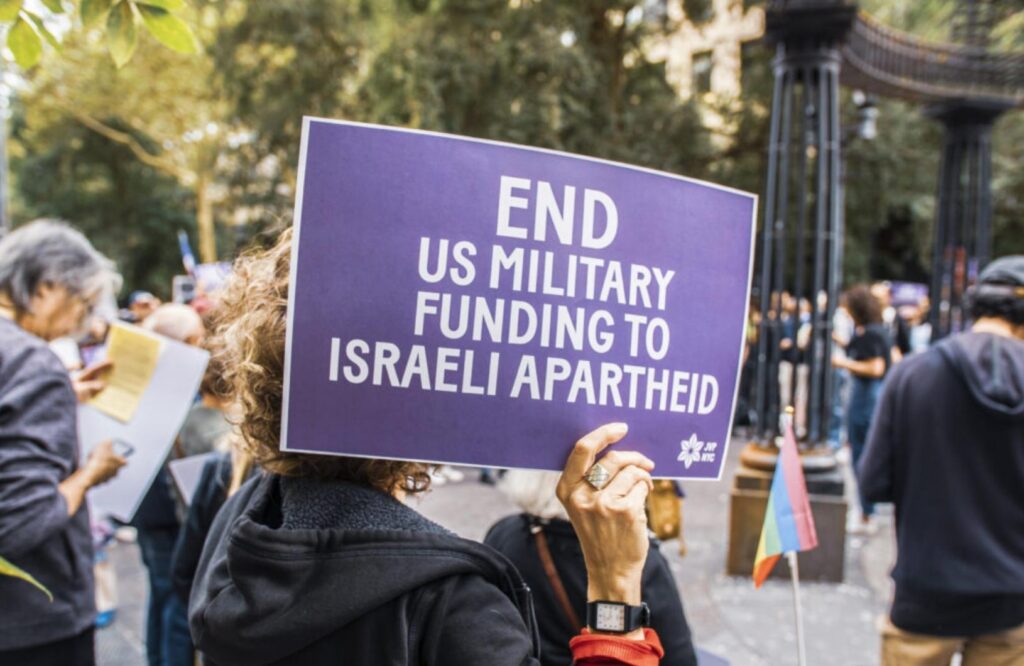
The U.S. government has the power to end these horrors. It must stop funding and arming Israel’s ongoing genocide.
Millions of Americans now see ending Israel’s genocide as intrinsically connected to their own needs. Now is the time to escalate our fight for a permanent end to U.S. support for the Israeli state.
The 119th Congress still has over two months to listen to people across the country to meet our demands. Email them now.
Expanding the War Machine: The Deadly Merger Between the U.S. and Israel’s Militaries
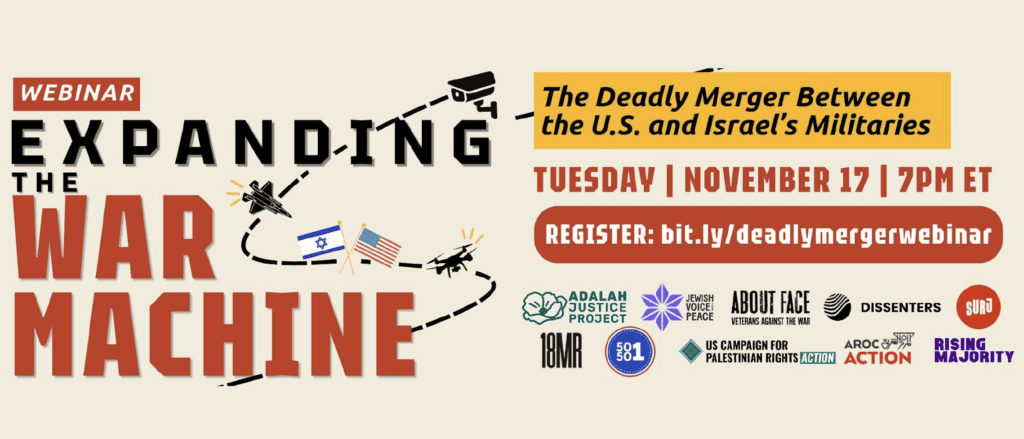
As President Trump claims that U.S. military support for Israel will be phased out by the end of the year, congressional leaders are negotiating provisions in the FY2027 National Defense Authorization Act (NDAA) that could fundamentally reshape and deepen the military relationship between the United States and Israel.
Join us next Tuesday, November 17 at 7pm ET to hear from experts about the true dangers of this proposal and its role in the Netanyahu-led plan to completely transform the U.S.-Israel military alliance into a structure that is far more difficult to disrupt and dismantle than traditional military “aid.”
During the webinar, you’ll learn what is at stake in the FY2027 NDAA, what Congress is negotiating, and why the proposed Deadly Merger deserves our attention.
What we’re reading: “Their bodies cannot survive starvation again”
For +972 Magazine, Ahmed Dremly reports on how families in Gaza are reacting to the “specter of famine” resulting from WFP funding cuts and the Israeli military’s ongoing obstruction of food aid.
We’re listening to: Stefanie Fox on We Can Do Hard Things
Last week, JVP Executive Director Stefanie Fox joined Glennon Doyle on her podcast, We Can Do Hard Things, about why U.S. support for Israeli apartheid is an issue every single American should care about — and how the U.S. government’s support for Israel is the backbone of its genocide.
What we’re doing: Historic BDS win in Providence
In Providence, organizers with JVP-Rhode Island and Providence for Palestine just made history by passing a binding law that will divest their city from Israel — by a landslide popular vote of 75%.
Read organizers’ reflections on their win and takeaways of how to bring similar divestment campaigns to cities around the country.
Donate now to RAWA
Donate now to Rawa, a Palestinian initiative supporting liberatory and resilient grassroots-led organizing across historic Palestine through participatory, democratic grant-making. Learn more about projects they support in Gaza here.
By supporting Rawa, you’re contributing to a vision of decolonized funding structures, and resourcing Palestinians on the ground as they work to meet their communities’ immediate needs and resist Israeli genocide and apartheid.


Get The Wire
Every week, the Wire reaches tens of thousands with critical news and analysis from Palestine, the United States, and the Palestine solidarity movement — and provides ways to take action.