
Three years of unspeakable tragedy
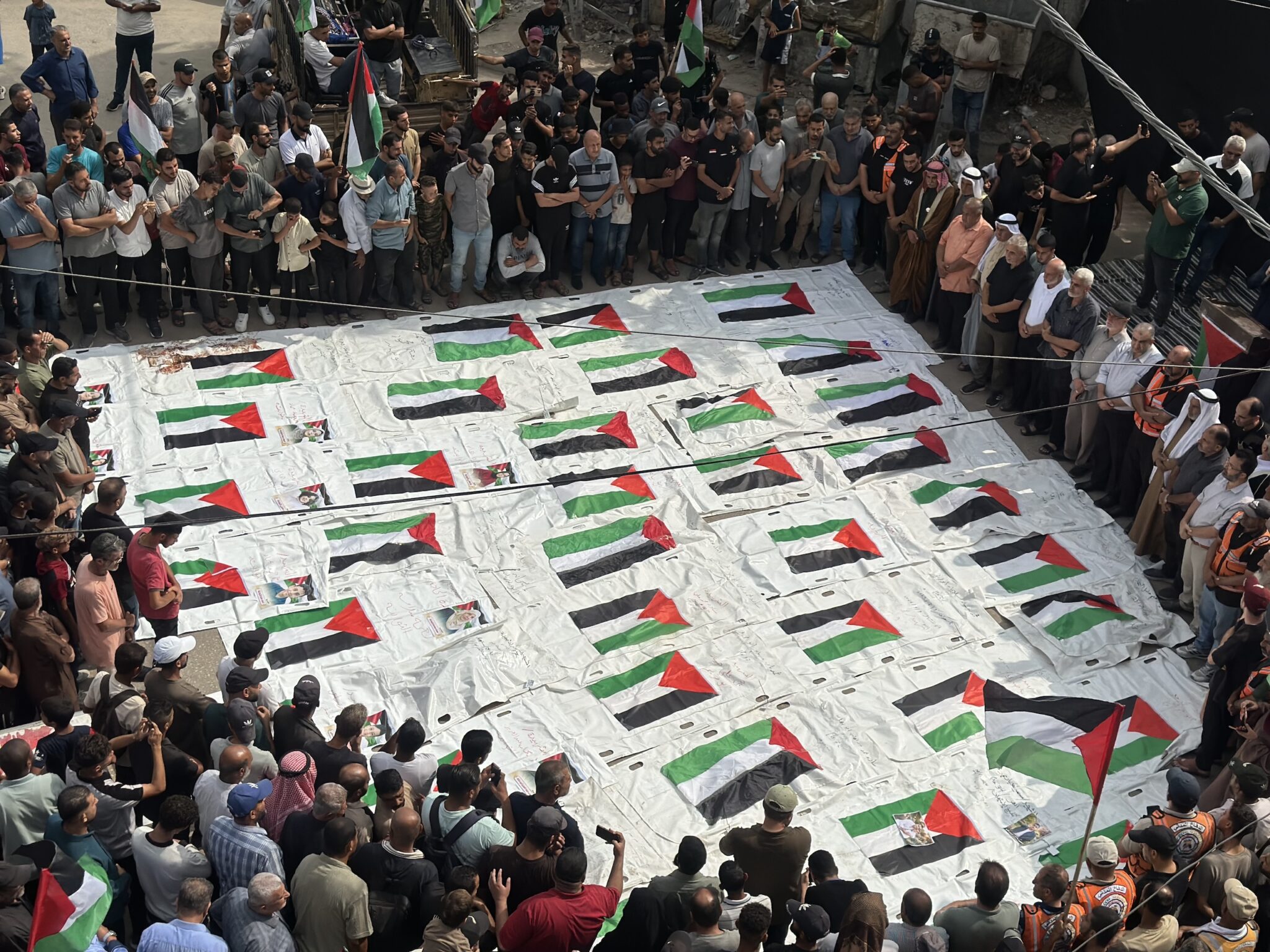
This week marks three years of escalated genocide.
The Israeli government’s campaign of mass slaughter has killed over 74,000 Palestinians in Gaza, approximately 1 in every 30 people, or 3% of Gaza’s population. Countless others remain missing, forcibly disappeared, detained, or are presumed dead, their bodies not yet recovered from under the rubble.
Gaza lies in ruins. Google satellite images updated for the first time in three years show an endless expanse of gray ash and rubble. Israel has damaged or completely destroyed over 80% of structures in Gaza, roughly 200,000 buildings. Over 1.9 million Palestinians live in a state of indefinite displacement, most in makeshift tents that flood with sewage water in the winter and bombed-out buildings that collapse without warning, killing entire families sleeping inside.
Israel has systematically laid siege to Gaza’s hospitals and assassinated scores of humanitarian workers. It has scorched Gaza’s farms, leaving all but 3% of cropland destroyed or inaccessible. It has targeted Palestinian children, killing over 20,000 kids in three years.
To cover up the magnitude of these crimes, the Israeli military has sought to bury Gaza’s truth tellers, assassinating over 200 Palestinian journalists in the last three years.
But we know what we have witnessed: The sick and injured burned alive in their hospital beds. Men, women, and children collapsing from hunger in the streets. The emaciated children starved to death under Israel’s siege. A little girl, the only survivor of Israeli shelling, pleading for help with first responders as the Israeli military rains bullets on her family’s car. Palestinians digging with their bare hands for hours to try to recover their loved ones from under the remains of destroyed buildings.
Jewish tradition teaches us b’tzelem elohim, that every life is precious. Every parent, grandparent, sister, brother, child and grandchild killed in the last three years was someone’s entire world. Even if the bombs stopped falling tomorrow, the wounds inflicted by the Israeli military will be felt for generations.
How did we get here?
For decades, the U.S. government has done everything in its power to enable, defend, and bankroll the Israeli state’s theft of Palestinian land and its ethnic cleansing of Palestinians — and for the last three years, the U.S. government has enabled, defended, and bankrolled Israel’s campaign to annihilate the Palestinian people. We know that every day of relentless horror for Palestinians on the ground is a day we have not yet done our part to end the U.S. complicity that sustains this injustice.
It is easy to feel overcome and despairing in the face of this reality. But it is our obligation to resist a politics of despair that says our grief and our rage are all we have access to. As organizers, we find our hope through collective action. We can feel shame at how much complicity is pouring by the billions from our towns and federal government and how much the genocide profiteering corporations are making from Palestinian suffering. But organizing means that we focus on the flip side: from right where we are, here in our reach, we have enormous obligation and opportunity to end that complicity.
Palestinians have been struggling for their freedom for decades, against all odds. Israel has ruthlessly repressed every single form of Palestinian resistance to oppression: from the criminalization of boycotts in the U.S. to Israeli snipers shooting at nonviolent Palestinian marches. Palestinian poets are jailed for posting poems to Facebook. And every day, Palestinians continue to fight for liberation and justice and dignity. Under utterly inhumane conditions, they have raised their families, educated their children, cherished their elders, cared for their land, preserved their histories, enriched their culture, and taught the world what it means to be steadfast.
As Jewish anti-Zionists, we know that we also have long lineages of solidarity and struggle in seemingly impossible conditions to draw on – from whom our cries of Never Again for Anyone resonate. We fight to end the genocide and dismantle the U.S.-Israel alliance, we have our ancestors at our backs, and we draw inspiration and courage from Palestinian resilience and resistance. It is this that makes our movements unstoppable.
Being in movement together means recommitting every day to our shared struggle: because we can only win if we move as one, because we will bring humility to the task of trying more and different until we succeed, and because we know in our bones that we will never be free until Palestine is free, and because our humanity — our belief in the preciousness of every human life — obligates us to keep fighting.
“It is not your duty to finish the work, but neither are you free to desist from it.” – Rabbi Tarfon, Pirkei Avot 2:16
Until Palestine is free.
Take action: Tell Congress to Block the Bombs.
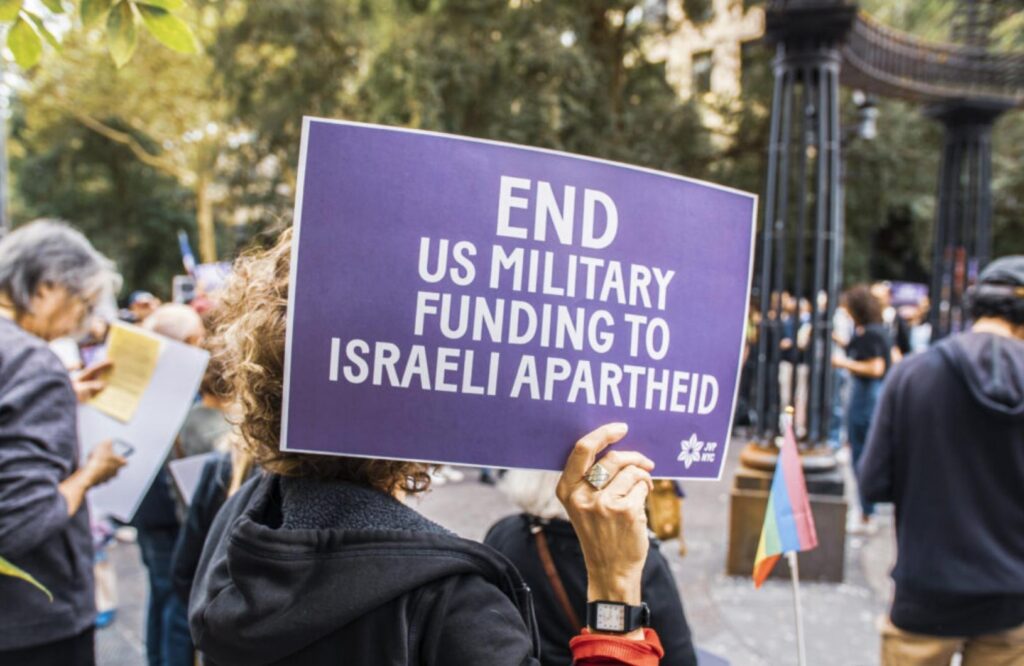
Last week, over 200 of us were on Capitol Hill to demand that our members of Congress support the historic Block the Bombs Act.
There are over 80 co-sponsors on this bill so far. Email your member of Congress now and tell them to block the bombs.
Channel your grief into collective power: Power Half-Hours for Gaza.
Join us every Monday and Wednesday to channel your outrage and despair into collective action to stop arming Israel.
Jewish Currents Live: A Day of Politics and Culture.
Jewish Voice for Peace is excited to partner with Jewish Currents on Jewish Currents Live: A Day of Politics and Culture. Join us on October 11 in Brooklyn, NY, for a day of performance, learning, and discussion featuring Arielle Angel, Keeanga-Yamahtta Taylor, Wallace Shawn, Fadi Quran, Molly Crabapple, M. Gessen, and many more guests.
We’re listening to: Left at Sinai.
Check out Left at Sinai, long time JVP member and leader, Rabbi Ariana Katz’s new weekly podcast of progressive commentary on the week’s Torah reading, to hear feminist, queer, trans, anti-colonial, and anti-Zionist Torah, committed to liberation of all people.
Donate to Rawa.
Donate now to Rawa, a Palestinian initiative supporting liberatory and resilient grassroots-led organizing across historic Palestine through participatory, democratic grant-making. Learn more about projects they support in Gaza here.
By supporting Rawa, you’re contributing to a vision of decolonized funding structures, and resourcing Palestinians on the ground as they work to meet their communities’ immediate needs and resist Israeli genocide and apartheid.


Get The Wire
Every week, the Wire reaches tens of thousands with critical news and analysis from Palestine, the United States, and the Palestine solidarity movement — and provides ways to take action.