
Welcome back students! You’re suspended.
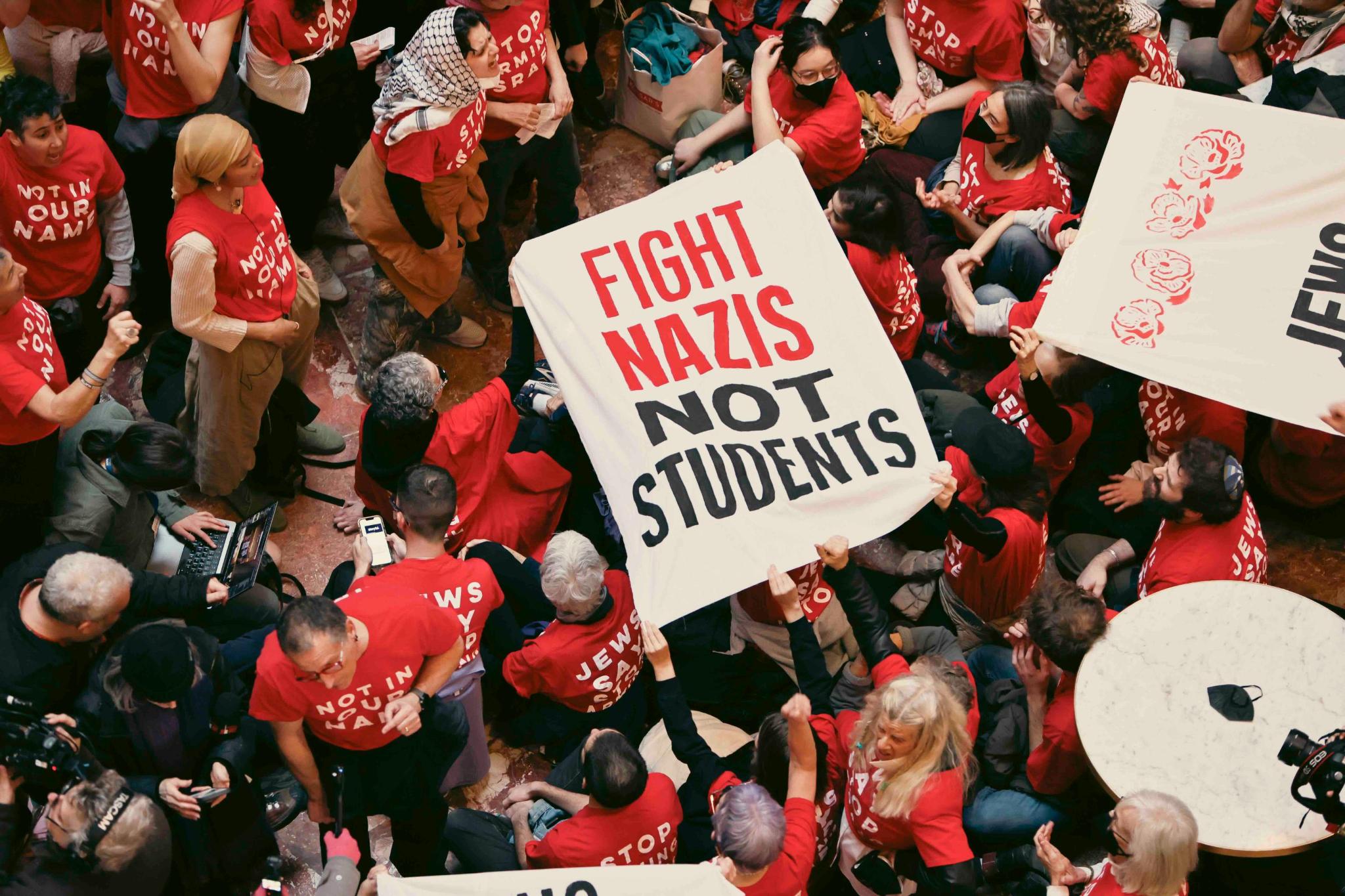
As students head back to campus, JVP chapters at more than 30 universities are springing back into action. The repression machine is waiting for them.
In this Wire, you’ll learn about universities going the extra mile to carry out the Trump regime’s war on higher education — from censoring the word “genocide” to attempting to designate “Zionism” as a protected class.
We also have 5 ways campus organizers have been fighting back — and winning.
The repression machine ramps back up
Over the summer, Carnegie Mellon banned 9 students from campus for painting anti-Zionist slogans on the university’s historic “free speech fence,” which has been a space for free expression for the last 100 years.
At Stockton University, a reference to the Gaza genocide was removed from the university’s Master’s in Holocaust and Genocide Studies webpage.
And at Haverford College, “Zionist” has now been designated as a protected class under the college’s anti-discrimination policies, with profound implications for anti-Zionist organizing on campus. More about that below.
Grasping opportunity from this repression, the Anti-Defamation League (ADL) just launched a brand-new initiative focused on rooting out “antisemitism” in college classrooms. The “antisemitism” cited by the ADL included a Northwestern course about the history of Palestinian film and a UC Berkeley literature course assigning a novel written by renowned Palestinian writer Ghassan Kanafani.
If these examples sound ridiculous, it’s because the ADL — and the broader right — are grasping at straws. A whistleblower inside Trump’s own administration said investigations into alleged antisemitism on college campuses didn’t find any proof and were intended to extort universities, not protect Jewish students.
But the truth doesn’t matter to Trump, the ADL, or the rest of the right-wing, anti-Palestinian forces leading this crackdown. This is about punishing anyone who speaks out against — or even acknowledges — the ongoing genocide of Palestinians.
Where has all the academic integrity gone?
For the last two years, The Trump administration has waged an all-out war on higher education. It has frozen or threatened to cut billions in federal funding and filed lawsuits in an effort to strongarm universities into bending to its will. Often, these attacks have been carried out under the guise of combating “antisemitism.”
To protect their bottom line, universities are doing the right’s work for them: implementing increasingly draconian measures clearly designed to prevent students from being able to organize against the genocide.
This didn’t start with Trump’s attacks. Even before the Trump administration launched its war on higher education, universities were prioritizing profit over academic integrity. They have long been beholden to wealthy donors, who determine what can be taught in the classroom or what language can be used on a university website. And they have deep financial ties with the American and global arms industries, including Israeli weapons manufacturers and the Israeli ministry of defense, both of which have funneled millions of dollars in unreported funding to schools like Columbia and Harvard.
It was no surprise, then, that when thousands of students rose up to peacefully demand an end to complicity in Israeli genocide, universities sent in cops to brutalize protesters and destroy their encampments. Two years later, universities readily suspend students for engaging in pro-Palestine advocacy: Occidental College just suspended the campus chapter of Jewish Voice for Peace after students launched a new encampment in April 2026 to demand that the university cut ties with Israel and ICE.
Laying the groundwork for future repression.
Universities aren’t just carrying out the Trump regime’s marching orders; they’re also helping lay the groundwork for future repression.
In the lead up to the new school year, a number of universities have rushed to settle lawsuits around alleged antisemitism. These settlements go beyond the adoption of the IHRA definition of antisemitism, itself a dangerous step because it conflates criticism of Israel with hatred of Jews.
Instead, these settlements — including the one Haverford just reached earlier this month — go so far as to treat “Zionist” as a protected class like race or religion. Not Judaism. Zionism: The political ideology driving Israel’s ethnic cleansing and genocide of Palestinians.
As long as there has been Zionism, there have been anti-Zionist Jews. Yet this step would treat those Jews — and every Palestinian that objects to their people’s dispossession and slaughter — as bigots engaged in hate speech. This has profound implications for anti-Zionist organizing on college campuses: It means that any explicitly anti-Zionist slogan, event, or protest could now be considered hate speech, punishable by the campus
When we fight, we win.
Our right to speak out for Palestine is under threat like never before. But when we fight, we can push back against Trump’s fascist crackdown — and we can win.
- Under pressure from our movements — including the JVP academic council, local organizers, and the over 1,400 of you who sent letters to university admin — Carnegie Mellon just reinstated 8 of the 9 banned students.
- This week, a judge ruled in a case brought by Stanford student journalists that the Trump administration’s attempt to deport international students in retaliation for their participation in Palestine protests violates the First Amendment.
- The JVP Academic Council has been meeting with campus administrations to push back against the conflation of anti-Zionism with antisemitism from their university antisemitism trainings.
- JVP-Cornell has relaunched their divestment campaign, “Students not Bombs,” demanding Cornell divest its endowment from Israel and end its partnership with Technion, the Israeli Institute of Technology, and divest from weapons manufacturers.
- At least 10 JVP student chapters are leading anti-Zionist High Holiday rituals, cultivating spaces on campus for anti-Zionist Jews — now a majority of Jews on campus — to find community and take action together and challenging the claims by Hillel to be the voice of Jews on college campuses.
The right knows they’re losing the narrative war: Poll after poll shows that the vast majority of Americans oppose their tax dollars being funnelled towards war, genocide, and apartheid. That means the attacks on students — attempts to smear student organizers as antisemites and shut down organizing for Gaza under the guise of combating antisemitism — are only going to get worse. JVP student chapters are on the front lines of this fight, and they need the weight of our movement behind them.
Here are three ways you can help defend students from right-wing attacks:
- Take action: Tell Congress to protect students
This week, the House of Representatives will vote on a Republican bill that threatens federal funding to universities in an attempt to silence and undermine the Palestinian liberation movement.
Your member of Congress will vote on H.R. 4795 in the coming days and they need to hear from you now.
- Take action: Tell Stockton University to stop censoring the word “genocide”
We’ve already sent over 12,000 letters to Campus administrators demanding they reverse their decision to censor language about the Gaza genocide from the Holocaust and Genocide Studies webpage.
Take action now so we can reach 20,000 letters by the end of the day.
- Take action: End disciplinary actions against final CMU fence painter
Under pressure from our movements, Carnegie Mellon University (CMU) has rescinded bans and dropped all charges against 8 of the 9 students who painted pro-Palestine messages on a fence that has been a space for free expression on campus for over 100 years.
Despite being charged alongside the 8 students whose cases have been dismissed, one student, Rosalyn, remains under investigation, banned from campus, denied access to dining halls, and at risk of expulsion.
Carnegie Mellon needs to hear from you once again. Demand that the university end its disciplinary actions against Rosalyn for supporting Palestinian freedom.
High Holidays 5787
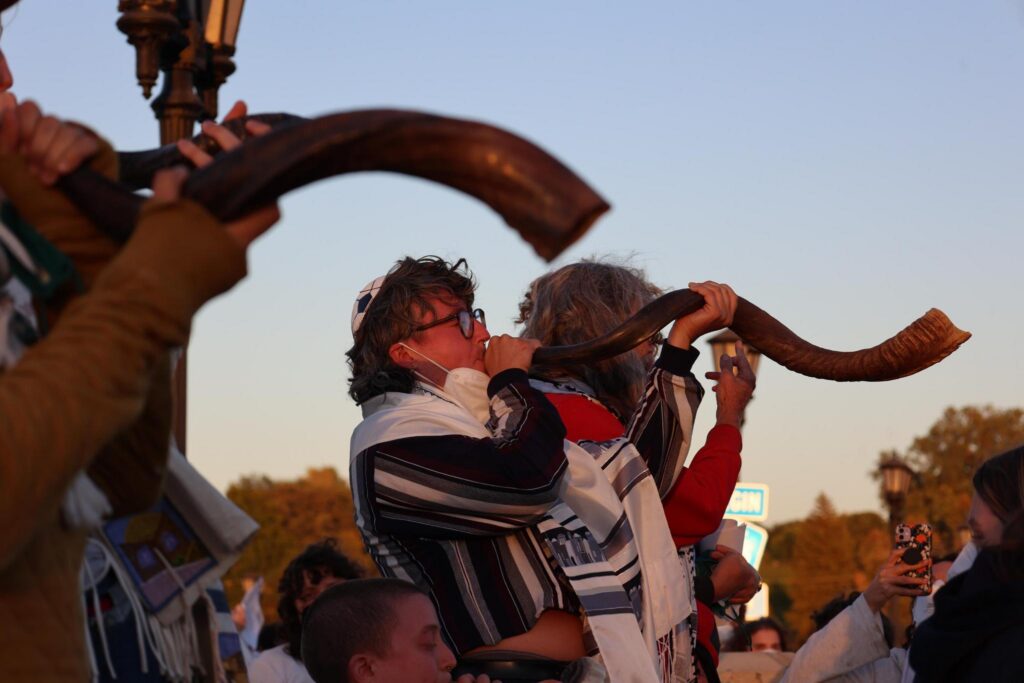
In less than two weeks, we will mark Rosh Hashanah 5787, the beginning of a new Jewish year.
In the words of JVP Lab’s Associate Director of Religious and Cultural Organizing, Rabbi Jessica Rosenberg, this is a time to refill our cups: to be intentional about what we must cast off, and what we must recommit to and bring with us into the new year.
Watch this video of Rabbi Linda Holtzman speaking to the power of the shofar during JVP’s Power Half-Hour for Gaza — and make sure to check out JVP Lab’s other High Holidays resources.
What we’re reading: Will Palestinian children have schools left to go to?
As children in Palestine get ready for the new school year, Ola Mohammad writes for Al Jazeera about the school Israeli officials are threatening to demolish in Masafer Yatta — and the fear and uncertainty plaguing its students.
“The occupation authorities do not usually tell the residents or the school administration in advance when the bulldozers will arrive.”
What we’re watching: Israeli settlers are out of control
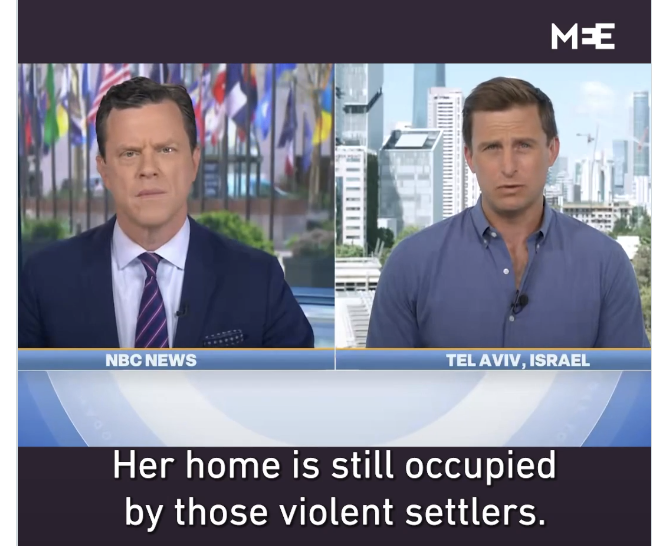
NBC Correspondent Matt Bradley recounts a violent attack by Israeli settlers that left him and his crew injured in the Occupied West Bank.
What we’re listening to: The last episode of JVP radio
In the final episode of JVP Radio, Washington for Peace and Justice organizer Layla and JVP-Seattle member Eliana discuss their ongoing “Cut Ties With Genocide” campaign.

The Wire is one of the largest American publications dedicated to justice. Every week, we cover important news from Palestine, the United States, and the Palestine solidarity movement — and provide ways to take action.


Get The Wire
Every week, the Wire reaches tens of thousands with critical news and analysis from Palestine, the United States, and the Palestine solidarity movement — and provides ways to take action.