

1,000 days of genocide.
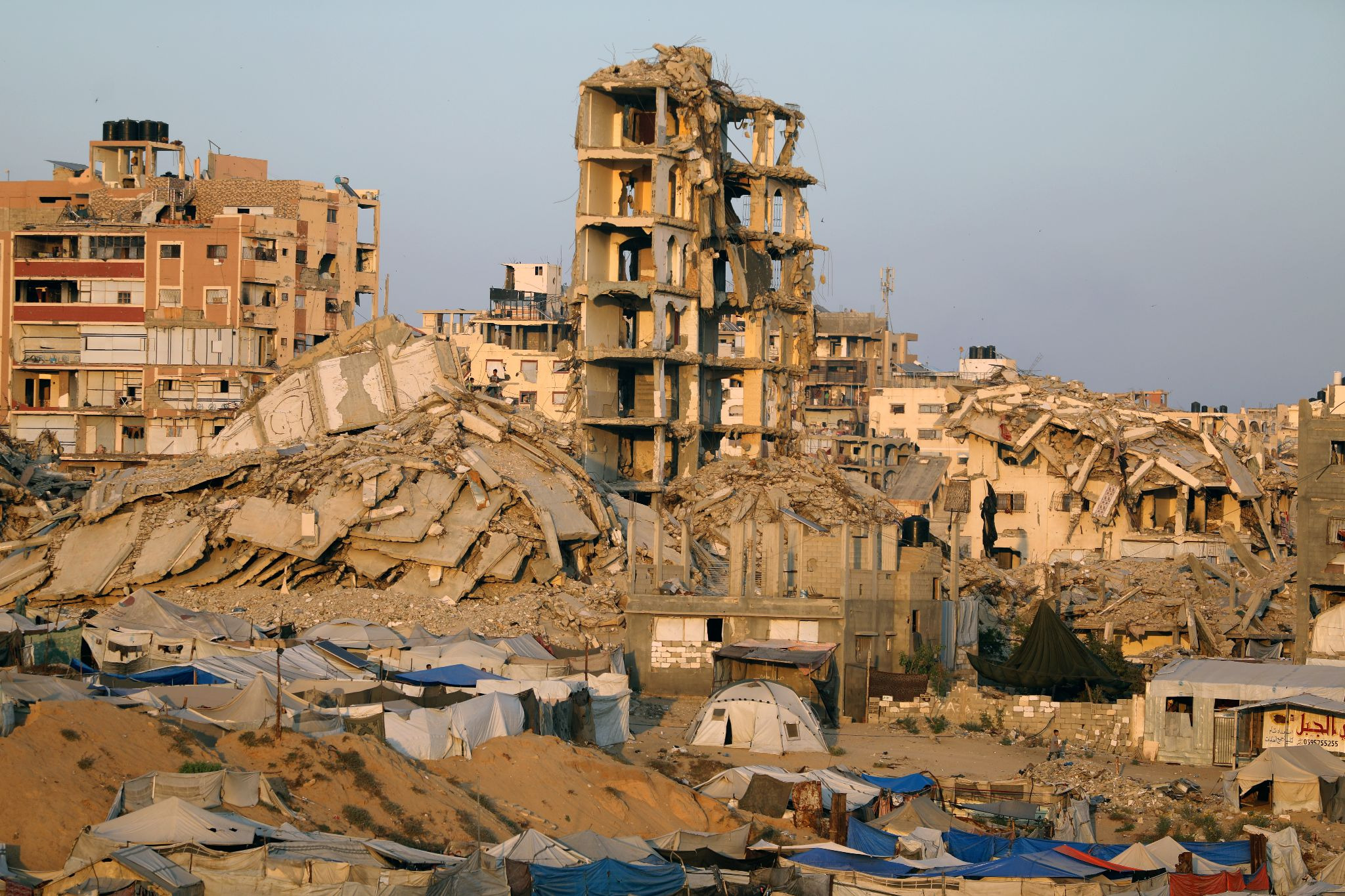
This Friday, July 3 marks one thousand days of Israeli genocide in Gaza.
For 1,000 days, the Israeli military has systematically flattened Gaza — and now south Lebanon — to make it impossible for Palestinians and Lebanese to return to their homes.
Israel’s unrelenting campaign of airstrikes accounts for some of this destruction. But the majority of it is being carried out by Israeli bulldozers and armored personnel carriers that are loaded with explosives and detonated remotely — all deployed after the bombs have stopped falling, in order to destroy whatever structures were left standing.
Israeli officials have publicly expressed their desire to cleanse Gaza of Palestinians time and time again. Israeli PM Benjamin Netanyahu said as much himself in March, endorsing the so-called “Trump plan for voluntary migration”:
“We are destroying more and more homes — they have nowhere to return to,” Netanyahu reportedly remarked in May. “The only expected result will be a desire for Gazans to emigrate outside the Strip.”
In war, “you tend to see a kind of haphazard, almost random distribution of ruination,” Forensic Architecture founder Eyal Weizman told The +972 Podcast. “It’s much more than destruction. It’s the erasure of destruction … The rubbing out of any trace of existence.”
“There is no city”
From the moment it launched its genocidal war on Palestinians in Gaza, the Israeli military set out to make the territory unlivable — whether through the intentional destruction of critical infrastructure like water treatment plants, the targeting and destruction of most of Gaza’s hospitals, or the torching of agricultural land. Their aim is clear: to annihilate every trace of Palestinian life in Gaza. This is the definition of genocide.
The systematic destruction of entire residential neighborhoods is one of many genocidal tactics deployed by the Israeli military. These demolitions are being carried out to facilitate the ethnic cleansing of millions of Palestinians and Lebanese.
Take Gaza’s southernmost city, Rafah, as an example: By April 2026, the Israeli military had destroyed 90% of residential neighborhoods in Rafah. After the Israeli military formally took control of Rafah in April, it went to work flattening what remained, transforming the once bustling Palestinian city — which includes Gaza’s only border with the outside world — into a barren buffer zone.
“The official mission was to open a logistical route for maneuvering, but in practice, the bulldozers were simply destroying homes,” one Israeli soldier told +972 Magazine and Last Call. “The southeastern part of Rafah is completely destroyed. The horizon is flat. There is no city.”
During the first two years of the Gaza genocide, the Israeli military destroyed or damaged over 92 percent of Gaza’s housing units, forced over 90 percent of Palestinians living in Gaza to flee their homes, for most multiple times over, and placed more than 86 percent of the enclave under displacement orders or transformed it into Israeli military zones.
By December 2023, just a few months into the genocide, international legal experts were already sounding the alarm about “domicide,” — “the widespread or systematic destruction of housing and civilian infrastructure essential to the survival of a population.”
The same tactics in Lebanon
The Israeli military began carrying out its genocide in Gaza in October 2023. Emboldened by the absence of any accountability for these crimes, it then expanded its campaign of destruction and ethnic cleansing to the people of Lebanon.
The heaviest damage has been concentrated in Lebanon’s south. Since 2023, the Israeli military has systematically flattened entire villages in South Lebanon and intentionally destroyed critical infrastructure and public services to make the area unlivable. A report from last week indicates that as of April 2026 over 11,000 buildings in South Lebanon alone had been completely leveled and thousands more partially destroyed — an estimated $1.38 billion in damage.
All of this is intentional: Before the October – November 2024 Israeli ground invasion, Israeli soldiers were provided with “demolition training” and told explicitly that their aim was to flatten Shi’a villages to make it impossible for local residents to return to their homes, a reservist told +972 Magazine and Local Call.
1,000 days of genocide
Despite a so-called “ceasefire” agreement reached in October, the killing hasn’t stopped. Last Wednesday, an Israeli missile killed an 11-year-old boy, Ahmed Al-Raqab, as he played next to his family’s makeshift tent on a beach west of Gaza city. A few days later, shrapnel from Israeli tank shelling killed 13-year-old Eileen al-Farra in southern Gaza.
“‘The children were playing and they fired a missile directly on them,’ Ahmed’s father, Sabri Al-Raqab, said, sobbing as he knelt on the floor of Nasser hospital with his arms across his son’s dead body in a final embrace.” – reporting from DropSite
This week, a UN Independent International Commission of Inquiry published a report confirming what Palestinians have always known: the Israeli military is deliberately targeting Palestinian children — killing over 20,000 children in the first two years of the genocide alone.
Since the “ceasefire” was reached in October, Israel has killed one child in Gaza every single day, according to UNICEF spokesperson James Elder.
Take action: Fund people, not bombs
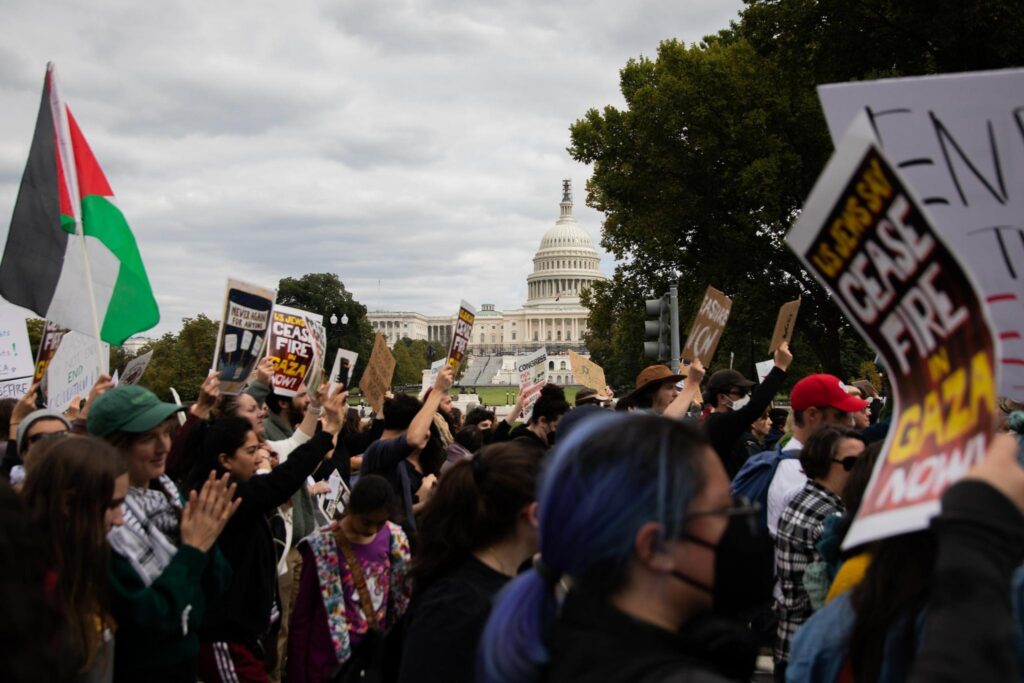
Together we’ve already sent over 16,000 emails to our members of Congress demanding they stop funding Israeli atrocities — and we cannot let up the pressure.
Email your Congresspeople now. If you already have, do it again so we can reach 20,000 emails today.
Palestine is on the ballot: Mass call TONIGHT

Join JVP Action for a mass call tonight at 8pm ET to talk about the pro-Palestine, JVP Action-endorsed candidates who have won in the midterms so far, and the fights still to come.
In Texas, Pennsylvania, New Jersey, New York, and now Colorado, candidates have run and won on platforms calling for an end to military funding and an arms embargo on Israel. We are showing, right now, that organized people can beat AIPAC money.
What we’re reading: “Render it unusable”
A joint investigation by +972 Magazine and Local Call shows that the Israeli military is deliberately flattening Gaza and southern Lebanon to prevent Palestinians and Lebanese from being able to return to their homes.
What we’re listening to: “Carving out an unrecognizable landscape”
Founder and director of Forensic Architecture Eyal Weizman discusses his new book, “Ungrounding: The Architecture of Genocide,” showing how the Israeli military is systematically flattening Gaza “and carving out an unrecognizable landscape of military roads, fortifications, and vast expanses of nothingness,” with the explicit aim of erasing Palestinian life entirely.
Movement victory: Condemning Scholasticide and Genocide in Gaza
Last week, the American Academy of Religion overwhelmingly passed a resolution condemning scholasticide and genocide in Gaza.
“Too often, centrist pundits try to cloud Israel’s policies of apartheid and genocide by presenting them as an intractable religious conflict. Today, the largest and most prominent association of religious scholars rejected that framing, clearly stating that the Israeli regime’s actions constitute crimes against education and humanity,” said Dr. Jonah Rubin, JVP’s Senior Manager of Campus Organizing

The Wire is one of the largest American publications dedicated to justice. Every week, we cover important news from Palestine, the United States, and the Palestine solidarity movement — and provide ways to take action.


Get The Wire
Every week, the Wire reaches tens of thousands with critical news and analysis from Palestine, the United States, and the Palestine solidarity movement — and provides ways to take action.