
Biggest protest in U.S. history. Now what?
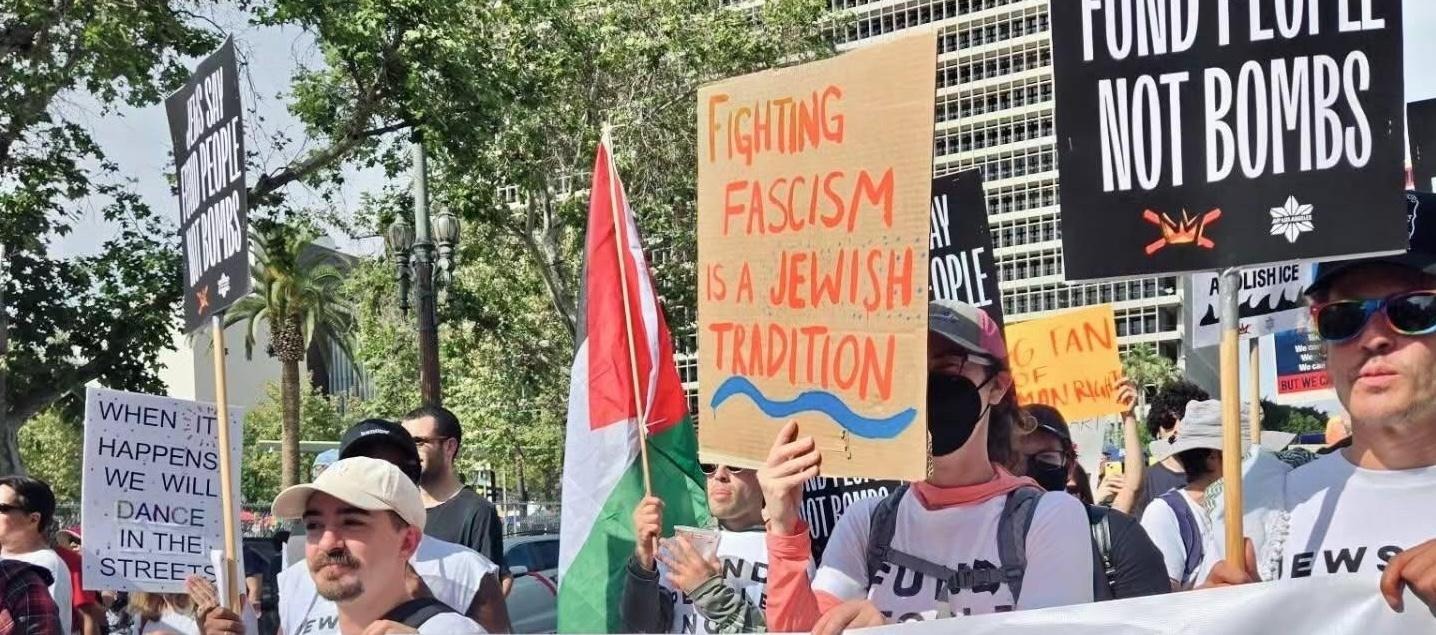
Jewish Angelenos took to the streets for #nokingsday to say: No war, abolish ICE, free Palestine. Source: JVP-LA
What does No Kings mean for our movements?
Over the weekend, over 8 million people took to the streets in towns and cities in all fifty states to reject the fascist Trump regime. Organizers of the No Kings mobilizations said it was the largest single-day protest in U.S. history.
Our movements are fighting for Palestinian liberation at a time of fascism and genocide. For so many of us, the despair is palpable. But so is public anger with the Trump regime, its brutal ICE occupations of our cities and towns, and the billions in tax dollars being funneled to Israel’s genocide in Palestine and a devastating war in Iran. As organizers, we need to know how to harness that outrage and transform it into sustained, collective action.
We need a vast, irresistible anti-war movement right now, focused on divesting from war and genocide and reinvesting in working class communities — and we have our work cut out for us.
That’s why thousands of JVP members from dozens of JVP chapters and pods took to the streets in cities and towns across the country to take part in No Kings demonstrations: from Syracuse, NY, to Albuquerque, New Mexico, to Lafayette, Indiana.
JVPers and countless partners seized the opportunity to ensure demands to end the U.S.-Israeli war on Iran and the U.S.-backed, Israeli invasion of Lebanon and genocide in Palestine were front and center; to welcome new people into the movement for Palestinian freedom; to organize those people into long-term struggle with us; and to build relationships across groups and movements at a time where a broad front will be required to defeat fascism.
Where do we go from here?
Now is the moment to bring people into long-term struggle. Mass mobilization should be understood as a jumping-off point for this more sustained, targeted organizing work. By making our demands visible at the national level, we continue to shift the narrative around popular support for Palestinian freedom and build political pressure towards divestment and an arms embargo. By showing up alongside our neighbors and coworkers and talking to them about Palestine, we draw the connection between U.S. militarism abroad and suffering at home, forging solidarities that we need in order to build a mass anti-war movement — and permanently disrupt the U.S.-Israel alliance that is devastating the entire region.
These are the conditions that make it possible to organize mass numbers of people into sustained organizing work. It is through local campaigns with strategic targets that we build momentum towards bigger and bigger wins, bringing even more people into movement with us, and ultimately widening the cracks in the U.S.-Israeli alliance.
In Seattle, for example, the Cut Ties with Genocide campaign ultimately forced Washington State to sell over $60 million in Caterpillar bonds. Over 18 months of organizing work by Palestinians and anti-Zionist Jews secured a historic win against a key corporation that profits from Israel’s genocide and occupation. This is an historic win for the Boycott, Divestment, and Sanctions (BDS) movement.
The groundwork for resistance to ICE in Minneapolis was laid through years of community-based and labor organizing, relationship building, efforts to deepen mutual aid networks, and lessons learned from the 2020 uprising against the police murder of George Floyd. This uprising inspired previously unorganized people across the country to stand in solidarity with their immigrant neighbors. For activists, it expanded their imagination and demanded a deepening of their organizational rigor.
Up Next: May Day
The next mass mobilization at the scale of No Kings will take place on May Day – May 1.During the Workers Over Billionaires national day of action, workers, students, and families will march, rally, train, and stage walk outs to demand: ICE Out. Tax the rich. Reject authoritarianism.
This May Day is being anchored by May Day Strong, a network of national and local labor and community organizations.
What’s happening in Iran, Lebanon, and Palestine?
In the last week, Trump threatened to “take the oil” in Iran and “obliterate” Iranian energy and water infrastructure, raising fears of a U.S. ground invasion — even as Trump also claimed that progress was being made towards a ceasefire.
If you’re confused, you’re not alone. Here’s what happened in the last few days:
- In an interview with the Financial Times on Sunday, Trump said it would be his preference to simply “take the oil” in Iran.
- Also over the weekend, the Washington Post reported that the Pentagon was preparing for several weeks of ground operations in Iran. Thousands of additional U.S. troops have been deployed to the region in recent days.
- On Monday, Trump posted on Truth Social that he would destroy “all of [Iran’s] Electric Generating Plants, Oil Wells and Kharg Island (and possibly all desalinization plants!)” — a war crime — should the Iranian government refuse to agree to a deal.
- With U.S. gas prices above $4 a gallon for the first time since 2022 and popular outrage with the war reaching a boiling point, Trump delivered a prime time address on Wednesday evening, during which he confirmed that the U.S. would escalate its bombing campaign in Iran over the next two to three weeks: “we’re going to bring them back to the Stone Age, where they belong.”
In the U.S.-Israeli war on Iran, and Israel’s relentless bombardment of Lebanon, the U.S. and Israeli militaries have killed thousands and displaced more than 1.2 million people. They have endangered the lives of millions of people throughout the region, forcing them into poverty during an impending global recession.
The Israeli government is expanding the accelerated ethnic cleansing and genocide in Palestine to new frontiers in Lebanon and Iran.
An Israeli ground invasion and wide-scale bombing campaign has decimated south Lebanon and Beirut, killing over 1,300 people and forcing more than 1.2 million people to flee their homes. Now, the Israeli government is threatening to occupy wide swathes of southern Lebanon and destroy any homes near the border, which would permanently displace over half a million people — in defense Minister Israel Katz’s own words, “in accordance with the model in Gaza.” The U.S.-Israeli war on Iran and the Israeli war on Lebanon have deployed the same genocidal tactics used in Gaza — bombings of critical civilian infrastructure, so-called “double-tap” strikes, and the deliberate targeting of journalists and medical workers.
In Gaza, Israel’s bombs continue to kill Palestinians, as does its blockade.
For Palestinians in Gaza, drinkable water is scarce, and critical infrastructure remains in ruins — nearly 700 Palestinians have been killed since the so-called “ceasefire” was reached in October 2025. The same day the U.S. and Israel launched their joint war on Iran, the Israeli government announced that it was closing all crossings into Gaza, bringing the entry of humanitarian aid to a complete halt and sending prices skyrocketing. For weeks, humanitarian workers have been forced to rely on a single crossing — at Kerem Shalom — to get critical supplies into Gaza.
With the world’s attention on Iran, Israeli settlers backed by the military are escalating their attacks on Palestinians across the Occupied West Bank, rampaging through Palestinian villages and towns, setting fire to homes and vehicles and brutalizing Palestinian residents. Since the beginning of 2026, Israeli military forces and settlers have killed at least 26 Palestinians, including six children.
The U.S. and Israel are systematically decimating all who stand in the way of this war of U.S. imperialist domination and the decades-long Israeli campaign to steal land, from Palestine to Lebanon and beyond, and destroy Palestinian and all indigenous resistance to Zionism. They must be stopped.
Take Action: Fund people, not bombs.
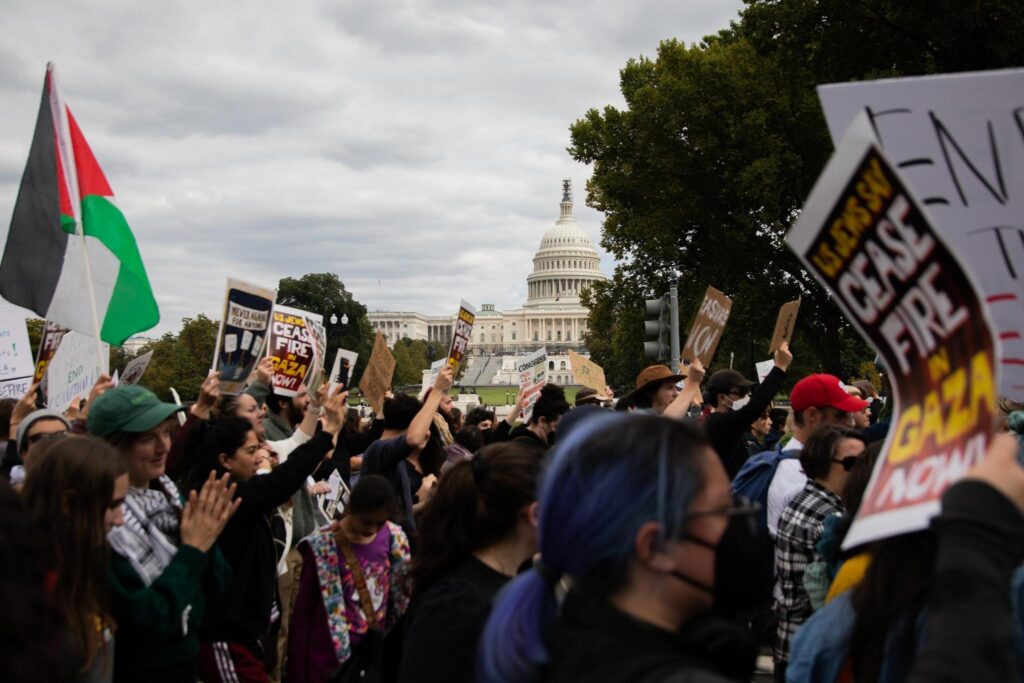
As the U.S. and Israeli governments continue to wage an illegal and immoral war on Iran, the Israeli military is continuing its genocide of Palestinians in Gaza, accelerating its ethnic cleansing of the occupied West Bank, and raining bombs on Lebanon.
Congress will soon have multiple opportunities to block weapons to Israel and to oppose any more funding for the war on Iran.
Passover 5786/2026: Next Year in Safety and Liberation
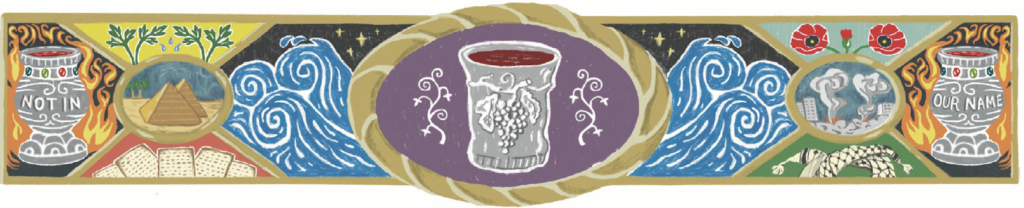
The story of Passover teaches us that our history is one of standing up to oppression. Today, we fight for the freedom of Palestinians and all people in a time of genocide and fascism.
It is by forging solidarity with all people committed to collective liberation that we honor Passover, and it is in this spirit that we dedicate the 5786/2026 Haggadah.
The Wire is one of the largest U.S. publications dedicated to justice. Every week, we cover important news from Palestine, the United States, and the Palestine solidarity movement — and provide ways to take action.


Get The Wire
Every week, the Wire reaches tens of thousands with critical news and analysis from Palestine, the United States, and the Palestine solidarity movement — and provides ways to take action.